Saturday, November 5, 2022

Hit in the head

Years ago, I was a high school senior minding my own business when the track coach told me that the school's main pole vaulter was out due to injuries.  He invited me to try to substitute for the missing athlete.  I thought to myself that I might be good at the event.  I put on shorts, got a pole, found the area and gave it a try.  I had vaulted over a ditch or two and, of course, I was attracted to the idea of being a sudden hit, scoring big points and setting amazing records.   Who needs talent when you have imagination?


I ran down the lead path with my pole at the ready.  No one watched me, which turned out to be a good thing, in a way.  There was a small cement pit for the pole to catch in.  I knew that I should let the point of the pole catch in that little pit and take off.  I did take off but did not sail up very high.  I came down in a state of disappointment, which quickly turned to pain, as the long, sturdy metal pole toppled into my head.  Ouch!  O, yeah!  Don't forget about the pole.  Cast it away from yourself.  Try again.  Run, leap!!  This time, I had not remembered to shove the pole away but I remembered to protect my head.  The falling pole was trying to score again but I raised my forearm to protect my head.


There are important nerves that run along the arm.   If you raise your forearm to deflect a falling metal pole, there is a good chance that the pole will strike a nerve.  In this case, it did.  Yow!!  


I tried several more times.  I cast the pole away from myself and suffered no more blows to the head or arm.   Each try, I managed to get a foot or two off the ground.  I ended my pole-vaulting career that same day. 

Tuesday, July 24, 2012

Me, pole un-vaulter

Me, pole vaulter

The Olympics in London are just about to begin.  It is always an exciting time, even if I don't spend much time watching.  I have read that various nations tend to concentrate on different sports and tend to show those on tv and emphasize them.  I think even Wimbledon has too many matches for very many of them to be televised much, so I can imagine a 4 year, international sports event has way too much to put on the tube.  My copy cover of Time showed the American gymnast Gabby Douglas but I gather different covers were sold all over the US.

When the issue arrived, I saw "Joe Klein, Pole Vaulter" was one of the article.  Klein's regular page is usually at the end of the issue and he is a self-deprecating writer who can take a George Plimpton-type stance about his ridiculously inept or mediocre skills.  That immediately brought back the days in my senior year of high school when I tried to be a pole vaulter.  The regular performer was hurt and the coach asked me to see what I could do, in case I might save the team a forfeit.  I had always been thrilled to see that lift up and up, 18 feet into the air and over that bar.  I figured it would be fun.

It wasn't fun.  I got no coaching, since the coach was busy with his real athletes.  I got no lift but I did get several clunkings in the head from the falling pole.  The clunks finally got my attention and the next falling pole was blocked by my forearm.  Who knew that crazy-bone nerves are not just in the elbow?  Wow!  That hurt and hurt.  I think I may have tried for 45 minutes or so and I may have come out the next day, too.  I did try to give it a full effort.  I imagined those pictures I have seen where the last moment is the vaulter doing what amounts to a one-hand stand from the end of the pole.  Nice image but none like that of me.  Don't look for me in London.

--
Bill
Main blog: Fear, Fun and Filoz
Main web site: Kirbyvariety


Thursday, August 24, 2023

Checking my past

It is handy to have a blog.  Mine goes back to 2008 and it is searchable.


I read about two women who are sharing first place in pole vaulting.  That reminded me of my own pole vaulting.   I had never tried or thought of trying when the track and field coach said to me that the team pole vaulter was sick and he asked me to try to fill in for him.  I thought I had written about my getting clunked in the head and in the forearm by the pole.  Yep, there on Novemer 5, 2022 https://fearfunandfiloz.blogspot.com/search?q=pole

There are several things I have failed at and pole vaulting is one of them.

Monday, May 18, 2015

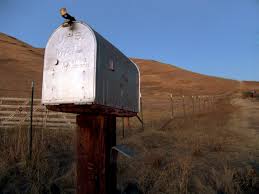
Mailbox adventures

Image result for mailboxes


Our mailbox sits on a post by the road.  The postman or woman drives along in a special vehicle with the steering wheel and other controls on the right side of the vehicle, instead of our usual left side.  That position enables the postperson to deliver our mail from the mail truck into the mailbox without leaving the truck.  


Without trying, I have learned to distinguish the truck's engine sound from other noises around us.  I have not learned to allow for the extra extension on my riding mower when I am collecting the grass cuttings.  Spring means they can be used for mulch but that means putting the rather large and clumsy grasscatcher on the mover.  It also means that the catcher is waiting to whack our mailbox unless I stay alert.  I have lost alertness enough times that I had to replace our mailbox today.  


I wanted a plastic one that sun, rain, snow, heat and cold would not affect.  I bought a plastic one but that store didn't have the sort of pole I wanted.  The last time I put up a box, I had an arrangement where I drove a big long metal stake in the ground with a sledge hammer.  There was a wooden pole that fit over the stake.  I have never mixed concrete and I didn't want to get into that mess.  You might not be messy with it but I don't trust me.


The plastic mailbox I bought didn't fit the pole I finally located.  The pole was the convenient kind so I bought a 2nd mailbox made by the same company that made the convenient pole.  The whole thing is up now.  Hope we get some mail tomorrow.


--
Bill
Main blog: Fear, Fun and Filoz
Main web site: Kirbyvariety


Wednesday, April 17, 2019

Home again

We are back from our travels.  We stayed at The Abbey Resort in Fontana, WI, in Springfield, Illinois, in Davenport, Iowa, and in Madison, Wisconsin.  If you hear that area called "fly-over country", I recommend some doubt. Whether it is a person, a book or an area, not paying attention can deprive you of fun and refreshment.  


Lynn likes to tell the routing and GPS apps to avoid highways.  She feels calmer and like she gets a better experience of both driving and viewing on back roads, less traveled roads, where the speed limits are lower.  What we are driving past is closer to us and seems more human. Because of her taste for back roads, I got to see wonderful vistas of farms and hills.


We went to Springfield to see things related to Abraham Lincoln.  We did and I learned more about his presidency, the public's views of the man, and his personal family life.  We sent out pictures of the Iowa 80 Trucking Museum, realizing that big trucks and containers on ships, trains and trucks bring us much the greater portion of what we have.  


One aspect of the telegraph and telephone systems I hadn't thought about until that museum  was the need for poles to carry the wires. Google search finds that there are about 180 million such poles in the US, which is roughly one pole for every 2 or 3 people in the country.  The information says that a treated pole can last 30 years without maintenance, or up to 75 years with maintenance. I remember the project my stepdad and I had just digging post holes for a farm fence.  The telephone poles are much bigger and heavier. Seeing an early truck especially built to dig adequate pole holds and hoist the poles in place made me realize the labor involved in our communication systems and history.


We saw the flooding in downtown Davenport and we realize that there is still flooding to be dealt with in many parts of the country.


Of course, a major reason for travelin off somewhere is to give ourselves the very great pleasure of coming home.  It is a wonderful place and we are grateful.


Wednesday, May 4, 2022

The artist Billo

Sometimes, I get called on to grow new skills.  Lynn told me there isn't anything interesting to look at in our backyard.  She has eyeballed the grass, the trees, the sky and the neighbors' backyard for just about 29 years.  Some people can gaze at their toe with interest and respect for hours but some can't.  


I decided to help her out.  I took inspiration from the artist Cristo and put up a line.  It is a nice white cord and it runs its length from a deck banister to another deck banister and out to a pole I erected.  I decorated the pole with a blue cap.


Now, she is ever so relieved to have something for her jaded eye to follow.  She says to let everyone know how elated she is to have genuine art right there in our yard.  


Thursday, August 9, 2012

The prize of not winning

I have lost wrestling matches and done my part to lose soccer games.  I have failed to pole vault successfully and not won prizes in bingo. Of course, any time I compete or enter a contest, I would like to win.  But I can see that not winning is a gift.

To understand the gift and its meaning, it is helpful to watch little children play a competitive sport or game of chance.  Of course, little children can have difficulty with concentrating on winning against an opponent, who may not appear to be as interesting as that flower over there.  But engage them in a game of chance and you can witness irrational exuberance about victory soon to come.

Like much of the rest of the world, we watched McKayla Maroney on the vault while the sportscaster could not stop repeating how certain it was that the young gymnast would be unbeatable, that the only rational question was how much better than her competition her own score would be.  If you watched, you know that she fell in a difficult move and that she won a silver medal, a fraction behind gold medal winner Sandra Izbasa of Romania.  Izbasa seemed as shocked as everyone else.  Everyone seemed to "know" that Maroney had the gold in her pocket and that performing was only a formality.  

Miss Maroney seemed as dignified and upright as could be expected at such a twist, maybe more so.  Still, it seems to me that she won a gift of great value.  I have heard that it can be very valuable to fail when one is young.  It is an early chance to see that life often holds something other than what is desired, that one can proceed to rise up and try again, often better later.  This is usually called something like "learning to take life's knocks" or "learning to fall down and get up again."  I wouldn't be surprised if some psychologists or development experts haven't already studied about what age we might have to reach before we know strong exuberance is not sufficient to create victory, even while we feel very, very hopeful of a win.

My friend loves basketball and has played in all sorts of leagues and levels but he remarks on the irony of being the winner or the loser in a game with a score of 123 to 121.  Often, in our sports, we need sophisticated and expensive equipment to tell us who won or who looked like they did too, but were .01 seconds later.

I read a chess book in college that ended with a salute to all those who have played chess and lost, without whom we would have no winners.  St. Paul famously said in First Corinthians 9:24 "Know ye not that they which run in a race run all, but one receiveth the prize?"  It is very nice of all those athletes to practice all those years and travel all those miles just so someone can be a winner.  Thanks to them all!

For touching and lovely writing on not winning, please see the always insightful and lilting Karen Maezen Miller on the subject.

Bill
Main blog: Fear, Fun and Filoz
Main web site: Kirbyvariety


Monday, November 8, 2010

Strategic Air Command

We recently toured the Strategic Air Command museum in Ashland, Nebraska.  You may remember "SAC", the military group charged with being prepared to do whatever it could if the Russians launched a missile attack against the United States.  If you have seen the Peter Sellars film "Dr. Strangelove", you know the idea.  We had big bombs, so big we were not sure just what they will do.  They have big bombs like ours.  We didn't want to start a fight using them but we didn't want to be wiped out, either.  So, we tried to stay ready and alert.  We (and they, too, I guess) tried to arrange for "mutually assured destruction".  (Note the acronym.)  "If you start something, you will be sorry" kind of thing.

We tried to make our threat credible by having planes armed and ready and actually in the air at all times in case our side needed to retaliate for something they did.  The museum makes clear the decades of effort and great expense that went into maintaining such a ready response.  Knowing very close to zero about what we could do and what they could do and tons of relevant details, it seems to me that we can't really know if it was all worth it or not.  I imagine all sorts of experts can line up for and against the idea of what was done.

There are times when risk and mental inflexibility just do not allow us to deviate from our plans, well-conceived or not.  I am listening to The Year that Changed the World by Michael Meyer.  It is about 1989.  The Americans were not paying attention when Gorbachev made it clear that it was time for some changes, when Poland and Hungary began to take him at his word.  The Americans charged with staying alert for Russian tricks felt they were too smart to be lured into dropping their guard just because of some language so different from the previous 50 years and more as to be unbelievable.  It took a while for the new situation to be grasped (and trusted) by all.

It does seem as though the matter of dollars, rubles and expense lay behind much of the change.  A Pole was quoted as saying, "40 years of Communism and we still have no toilet paper".  When the Hungarian government decided to stop the bother and expense of patrolling their border to keep citizens from fleeing into Austria, they explained their 'outlandish' decision with the statement that all that border stuff was simply more than they could afford.

Tuesday, October 20, 2015

The development of us and cooking

In the last three weeks, I have run into many salutes to cooking.  Not the pleasures of the table, nor the pleasure of keeping the ol' bod alive and functioning but the use of fire to change the chemical composition of food.  Until recently, I thought of fire for light at night and heat when needed.  Here, halfway to the north pole, we are aware of the need to conserve body heat or die.  But a local retired dietician, a video from the Australian university of New South Wales, a TED talk by a brain scientist and the impressive book that several friends urged me to read, "Sapiens", have all pointed out that only humans cook.  They all say that we have big, energy-consuming brains that would require 5 to 9 hours a day of eating without cooking.  The basic idea is that high calories foods such as wheat, rice and potatoes don't yield those to the human body without being cooked.  


You always hear that we are the only animals with this or that: language, writing, photography, musical instruments, cars and what not.  I am reasonably confident that you can say we are the only animals that cook.  Claude Levi-Strauss, the French anthropologist and more, examined the culture of the dining table and the manners of the table.  Another writer in this area is the interesting Margaret Visser.  She is the author of "Much Depends on Dinner", which I listened to but is available as a book on Amazon and an audio book and a downloadable PDF file from the internet.


But as of about 2009, the Harvard "biological anthropologist" and primatologist Richard Wrangham said in an interview in Discover magazine that until the last few years, little or no research had been done on the difference to a human body between the calorie extraction of cooked food and raw.  He is the author of Catching Fire: How Cooking Made Us Human.  He says in that interview:


About 25 years later, it occurred to me that my experience in Gombe of being unable to thrive on wild foods likely reflected a general problem for humans that was somehow overcome at some point, possibly through the development of cooking. (Various of our ancestors would have eaten more roots and meat than chimpanzees do, but I had plenty of experience of seeing chimpanzees working very hard to chew their way through tough raw meat—and had even myself tried chewing monkeys killed and discarded by chimpanzees.) In 1999, I published a paper [pdf] with colleagues that argued that the advent of cooking would have marked a turning point in how much energy our ancestors were able to reap from food.

To my surprise, some of the peer commentaries were dismissive of the idea that cooked food provides more energy than raw. The amazing fact is that no experiments had been published directly testing the effects of cooking on net energy gained. It was remarkable, given the abiding interest in calories, that there was a pronounced lack of studies of the effects of cooking on energy gain, even though there were thousands of studies on the effects of cooking on vitamin concentration, and a fair number on its effects on the physical properties of food such as tenderness. But more than a decade later, thanks particularly to the work of Rachel Carmody, a grad student in my lab, we now have a series of experiments that provide a solid base of evidence showing that the skeptics were wrong.


--
Bill
Main blog: Fear, Fun and Filoz
Main web site: Kirbyvariety

Twitter: @olderkirby

Tuesday, May 19, 2009

Heroics

I love this story. It is on the web in more than one place but here is one link: http://www.wattstapes.com/dobson.htm

A Short Story by Terry Dobson -
a master of Aikido and conflict resolution
THE TRAIN CLANKED and rattled through the suburbs of Tokyo on a drowsy spring afternoon. Our car was comparatively empty - a few housewives with their kids in tow, some old folks going shopping. I gazed absently at the drab houses and dusty hedgerows.
At one station the doors opened, and suddenly the afternoon quiet was shattered by a man bellowing violent, incomprehensible curses. The man staggered into our car. He wore laborer’s clothing, and he was big, drunk, and dirty. Screaming, he swung at a woman holding a baby. The blow sent her spinning into the laps of an elderly couple. It was a miracle that she was unharmed.
Terrified, the couple jumped up and scrambled toward the other end of the car. The laborer aimed a kick at the retreating back of the old woman but missed as she scuttled to safety. This so enraged the drunk that he grabbed the metal pole in the center of the car and tried to wrench it out of its stanchion. I could see that on of his hands was cut and bleeding. The train lurched ahead, the passengers frozen with fear. I stood up.
I was young then, some 20 years ago, and in pretty good shape. I’d been putting in a solid eight hours of aikido training nearly every day for the past three years. I like to throw and grapple. I thought I was tough. Trouble was, my martial skill was untested in actual combat. As students of aikido, we were not allowed to fight.
"Aikido," my teacher had said again and again, "is the art of reconciliation. Whoever has the mind to fight has broken his connection with the universe. If you try to dominate people, you are already defeated. We study how to resolve conflict, not how to start it."
I listened to his words. I tried hard I even went so far as to cross the street to avoid the chimpira, the pinball punks who lounged around the train stations. My forbearance exalted me. I felt both tough and holy. In my heart, however, I wanted an absolutely legitimate opportunity whereby I might save the innocent by destroying the guilty.
This is it! I said to myself, getting to my feet. People are in danger and if I don’t do something fast, they will probably get hurt.
Seeing me stand up, the drunk recognized a chance to focus his rage. "Aha!" He roared. "A foreigner! You need a lesson in Japanese manners!"
I held on lightly to the commuter strap overhead and gave him a slow look of disgust and dismissal. I planned to take this turkey apart, but he had to make the first move. I wanted him mad, so I pursed my lips and blew him an insolent kiss.
"All right! He hollered. "You’re gonna get a lesson." He gathered himself for a rush at me.
A split second before he could move, someone shouted "Hey!" It was earsplitting. I remember the strangely joyous, lilting quality of it - as though you and a friend had been searching diligently for something, and he suddenly stumbled upon it. "Hey!"
I wheeled to my left; the drunk spun to his right. We both stared down at a little old Japanese man. He must have been well into his seventies, this tiny gentleman, sitting there immaculate in his kimono. He took no notice of me, but beamed delightedly at the laborer, as though he had a most important, most welcome secret to share.
"C’mere," the old man said in an easy vernacular, beckoning to the drunk. "C’mere and talk with me." He waved his hand lightly.
The big man followed, as if on a string. He planted his feet belligerently in front of the old gentleman, and roared above the clacking wheels, "Why the hell should I talk to you?" The drunk now had his back to me. If his elbow moved so much as a millimeter, I’d drop him in his socks.
The old man continued to beam at the laborer.
"What’cha been drinkin’?" he asked, his eyes sparkling with interest. "I been drinkin’ sake," the laborer bellowed back, "and it’s none of your business!" Flecks of spittle spattered the old man.
"Ok, that’s wonderful," the old man said, "absolutely wonderful! You see, I love sake too. Every night, me and my wife (she’s 76, you know), we warm up a little bottle of sake and take it out into the garden, and we sit on an old wooden bench. We watch the sun go down, and we look to see how our persimmon tree is doing. My great-grandfather planted that tree, and we worry about whether it will recover from those ice storms we had last winter. Our tree has done better than I expected, though especially when you consider the poor quality of the soil. It is gratifying to watch when we take our sake and go out to enjoy the evening - even when it rains!" He looked up at the laborer, eyes twinkling.
As he struggled to follow the old man’s conversation, the drunk’s face began to soften. His fists slowly unclenched. "Yeah," he said. "I love persimmons too…" His voice trailed off.
"Yes," said the old man, smiling, "and I’m sure you have a wonderful wife."
"No," replied the laborer. "My wife died." Very gently, swaying with the motion of the train, the big man began to sob. "I don’t got no wife, I don’t got no home, I don’t got no job. I am so ashamed of myself." Tears rolled down his cheeks; a spasm of despair rippled through his body.
Now it was my turn. Standing there in well-scrubbed youthful innocence, my make-this-world-safe-for-democracy righteousness, I suddenly felt dirtier than he was.
Then the train arrived at my stop. As the doors opened, I heard the old man cluck sympathetically. "My, my," he said, "that is a difficult predicament, indeed. Sit down here and tell me about it."
I turned my head for one last look. The laborer was sprawled on the seat, his head in the old man’s lap. The old man was softly stroking the filthy, matted hair.
As the train pulled away, I sat down on a bench. What I had wanted to do with muscle had been accomplished with kind words. I had just seen aikido tried in combat, and the essence of it was love. I would have to practice the art with an entirely different spirit. It would be a long time before I could speak about the resolution of conflict.
Terry Dobson

Thursday, March 31, 2016

Free food

​We have a post in the backyard with a birdseed feeder, two suet cages and a finch-seed sock.  The suet or fat is what the woodpeckers go for.  Those birds are used to being upside down on a trunk or at any other angle.  They are experienced with being in a vertical position, holding on with their feet and finding something delicious.  The suet can be pecked between the bars of the cage holding it.  The woodpeckers go right for the suet every time.

The finches land on the seed sock and each season need a little time to get used to it.  They peck right through the cloth but as the dozens of eaters do their work, the level of the seed inside naturally drops.  At first, some birds land at the top of the sock while the seed level has dropped below that point.  They peck a few times and realize they aren't getting any food so they slide lower to where the seed is.  After a couple of hours, they know to look at the seed level before landing.


The robins and junkos are used to finding seeds and such right on the ground and are not comfortable eating from a feeder.  The crows and some jays and blackbirds are literally too big to fit on a feeder but carefully comb the ground under and around the feeder to find food that has been dropped or spilled from the feeders on the pole.  

Most of the aggression I have seen appears to be within a species. Males will fly as though to land on top of a female and she will fly off, sometimes to another eating spot and sometimes not.  From what I can tell, males will displace other males and females will displace other females but almost always within the same species.  It does seem that smaller birds stay away from, and out of the way of, larger birds.  Doves and crows are among the largest and when they land, the smaller birds often leave.


There is a large almost hemispherical baffle on the post holding the feeders and it generally seems to discourage squirrels from getting into the feeders.  Two or three squirrels regularly comb the ground under the feeders very carefully as does a chipmunk or two.  They have been doing so all winter.  I guess rabbits and deer may also eat some of the grain but I haven't actually seen either at the feeders nor clear sets of tracks in snow.


We purposely put the feeder out in the middle of our back lawn where we can see everything there.  We have had the feeder up for about two years and so far no hawks or cats or other predators have appeared.

​


--
Bill
Main blog: Fear, Fun and Filoz
Main web site: Kirbyvariety

Twitter: @olderkirby

Sunday, December 27, 2015

What day is it?

I began studying Fortran, a computer language in the first semester of graduate school. We had a computer department on the campus and people to staff it.  As far as I could tell, the people in the department were developing their curriculum and department as they went along.  This was the mid 60's.  Our teacher was openly developing his knowledge of Fortran and computer use at the same time we were.  There were six of us in the one-credit class.  The teacher gave us one assignment but it ran for three years.  In the end, I finally got the one credit I have in computer science.


That one assignment was to write a computer program which would take any two dates as input and give the number of days between them as output.  At first, that seemed straightforward and easy.  But our teacher was very tricky.  He was also inventing twists, turns and extensions as time went on.  Researching possible challenges he might give us, we learned that in1752, all British lands, including the American colonies, agree to accept the calendar adjustments created much earlier under Pope Gregory XIII to correct the calendar.  The Pope's astronomers had calculated that the calendar needed to omit 11 days for better adjustment and different countries adopted the correction at different times.  The British lands had riots over the correction, where some workers feared the shortened month would result in less pay.  It seems that the calendar riots resulted in full pay for that month's work.


We just recently had the winter solstice here on earth, the moment when the earth's north pole is tipped as far away from the sun as it ever gets (we hope!).  I carry in my head the dates of the 21st of December, March, June and September for the change of the seasons but I have seen that the calendar sometimes says the 22nd of the month is the pivotal change for a given year.  I have read that the exact moment of the solstice can happen on any day from the 20th to the 24th.  This year, according to various web sites, the winter solstice occurred at 10:49 PM Central Standard Time.  After that time, for about 6 months, we will get longer days and shorter nights.  The longer days, with more sunshine, will give us spring and blooming plants.  We still have many days to go before the winter days are noticeably longer and brighter but we are on our way.


Since we cussed and re-punched our computer cards to try to meet the tests of our teacher for three years, I have great respect for the scholars, calculators, thinkers, and debaters in many lands for many governments and organizations over several millennia to try and find a humanly useable system that combines in a fairly simple and straightforward way, the days, the weeks, the months and the seasons. Three cheers for the calendars!


--
Bill
Main blog: Fear, Fun and Filoz
Main web site: Kirbyvariety

Twitter: @olderkirby

Sunday, November 4, 2012

Hot and cold (Welcome to normal time, not daylight saving)

It is not unusual when driving in different parts of the country to see a sign commemorating some historical event that took place in the area.  However, not too far from us, there is a sign commemorating a geographical fact.  It explains that it is posted on the 45th parallel of latitude and that is of note because it is the mid-point between the north pole of the planet and the equator.  People in the US usually think of Wisconsin as a place with cold winters and deep snow.

We just returned today from Puerto Rico, the American commonwealth island.  It lies south of the Tropic of Cancer and is therefore officially in the earth's tropic zone.  We were often at the 18th parallel of latitude on our visit.  We haven't spent much time in the tropics before the trip, just passing through to get to New Zealand and Australia.  We did spend two weeks in Hawaii which is also tropical.

Here in Wisconsin, it is now in 20 and 30° Farenheit temperatures much of the time while in Puerto Rico, the temperature is in the high 80's in the day and high 70's in the coolest part of the night.  People in our town dislike temperatures above 80 for the most part while the Puerto Ricans we talked to found the idea of 20° incredible.

Reports and ideas are quite different from experiencing actual conditions.  Winds, humidity and clothing, of course, make a big difference in what one actually feels.  Since our bodies basically stay at 98° F., all the temperatures lower than that normal level allow heat to escape quickly or more slowly from our bodies.  

I have read somewhere that the lowest core body temperature a person has reached and survived is about 90° while death will result for most of us if our bodies reach 107°.  So, we wet ourselves, air-condition ourselves, jacket and mitten and long-john ourselves as needed to stay in that narrow 17-20 degree band.  We are pretty good at doing so.

But in addition to actual physical matters of hot and cold, we have ideas and rumors.  It is no rumor that my finger tips develop splits in the skin if my hands are exposed to too much cold.  They are rather delicate and can start showing those fissures when my body as a whole was feeling fine.  The mind of a person who has never experienced cold temperatures can deliver fear and dread out of proportion to actual experience.  As a teen without a car, I often had to wait for a public bus and got very uncomfortable at 20° while in Wisconsin, with a dry cold usually, one that was not humid as one gets in London, and, yes, wearing good gloves, a good hat and a scarf to keep body heat inside my coat, I am not uncomfortable at 20° below zero.  Especially if I am walking or running or snow-shoeing instead of standing more or less still at a bus stop.

--
Bill
Main blog: Fear, Fun and Filoz
Main web site: Kirbyvariety


Friday, April 12, 2013

Humor and help from friends

It is getting ridiculous with the snow, cold and wind here.  I mean we are below the 45th parallel of latitude, which means we are closer to the hot equator than to the cold pole.  So, stop already with the little white flakes.


It did help that our local paper has a headline "Folks Say No to More Snow".  It did help that a Floridian told me to man up and stop whining, one of my ancestral habits.  It did help that a friend sent a picture of a car's thermometer showing 90°.  It did help that there were many witty comments and pictures for my wife to show me on Facebook.  The one I liked best showed a computer-type insert that said,"Installation failed.  Spring 2013 not available in your country".  I could not find that on the web but I did find one that said Spring 2013 was not available in my state and advised me to try Florida.


We two have found that wisecracks and witticisms help very much with pain, embarrassment and disgust with one thing and another.  Beyond the jokes and the uplift they give, beyond the anger-lowering laughter lies the feeling that everyone around here, smarter, better-looking, old hand at winter or new transplant, is similarly peeved.  We all feel sympathy for the robins, always puffed up and trying to insulate themselves. The fact that others, with different personalities and ages and circumstances, feel much as I do makes for a family bond, a merry heave-ho as we all pull on the lines to move the cold somewhere else and the warmth, sunlight and blossoms here.

--
Bill
Main blog: Fear, Fun and Filoz
Main web site: Kirbyvariety

Thursday, May 21, 2009

Drinking water

I wrestled in high school and college. It was the only sport I went out for with any seriousness. As a high school senior, I was asked to try to fill in for an injured polevaulter but I was no good at it. I kept getting hit by the giant falling pole and I didn’t like it. In college, I went out for the soccer team, our school’s main fall sport. I was terrible, running about without a feel for what I was doing, until the frustrated coach would bench me.
During all that time, I paid no attention to the business of drinking enough water. I wrote a freshman research paper on nutrition and still didn’t run into the subject of personal hydration. Sometime, in my 30’s or 40’s, I read that energy levels and muscle cramping are related to drinking enough. At that time, the idea was that caffeinated beverages subtracted from available water and that the fundamental guide was 8 oz. 8 times a day.
During my 40’s and 50’s, I prided myself on my healthy practice of drinking 100 oz. a day. I had no clear way of seeing benefits or costs but I felt ok about the practice. I read Andrew Weil’s books and respected most of his ideas. He included the notion that most people don’t drink enough water and used the mnemonic “namais”, (never) for “Not As Much As I Should”. I felt I was drinking as much as I should.
When my blood pressure began to rise from aging and a family pattern, my doctor put me on three medicines, one of which was a diuretic. The high water intake, aging and that medicine quickly become intolerable. I needed to cut down on water intake. A urologist told me that the urge to urinate is proportional to the oversupply of water. That was helpful and I began to cut back, while getting the tiniest amount of the diuretic.
About that time, our local paper carried a statement by Heinz Valtin, emeritus Dartmouth professor of nephrology, stating his review of research and knowledge indicated that 8 oz. 8 times a day was too simplistic. He said that the sensation of thirst is highly sensitive and that the idea that feeling thirst meant the body was already in a dehydrated state was incorrect. Thirst, he said, was a good guide to water intake. He also said that foods and beverages, caffeinated or not, add water to the body helpfully.
A few years later, my stepfather-in-law became dehydrated nearly to the point of dying and he did it three separate times. Clearly, no sensation of thirst was properly guiding him. He ignored his wife’s urging more water on him.
Most authorities mention the color of one’s urine as a helpful sign, the lighter the better. The National Institute of Medicine issued this statement in 2004. It states that water needs are individual but that authors feel that most people meet their water needs adequately.
Stevens Point is known in some places as The City of Wonderful Water. We do feel that its water is good and we often find tap water too chemical or bad smelling. We sometimes take a Brita filter and pitcher with us to get a more acceptable quality of water.
I recently received a powerpoint on the cost and environmental problems caused by bottled water. Before there was bottled water, I wished it were available. Now, we use refillable steel bottles.

Saturday, July 11, 2015

Life abounds

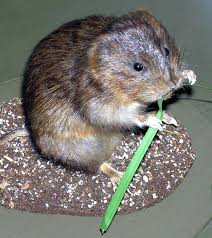
Wisconsin is not especially warm.  Most parts of it have pretty good rainfall.  We are right on the midpoint between the equator and the North Pole so the tilt of the earth gives us long days at this time of the year.  We see life everywhere just now.  Of course, in the famous DEAD of winter, we don't see as much but part of that is because we don't look in the right places.  Under the snow, volesImage result for vole

tunnels in the dead grass and lives on the roots.  Sure the voles are much more active during this season and we have holes under our shed to their living quarters.  We have a wren that has just moved into our birdhouse for bluebirds that the tree swallows just vacated.IMG_0342.JPG


Our grass and other plants are not as vigourous as the spiders everywhere and the bees and their relatives.  You can't see the yellow jackets in this picture but their nest is in the eaves right by the hookFrom Skitch.png

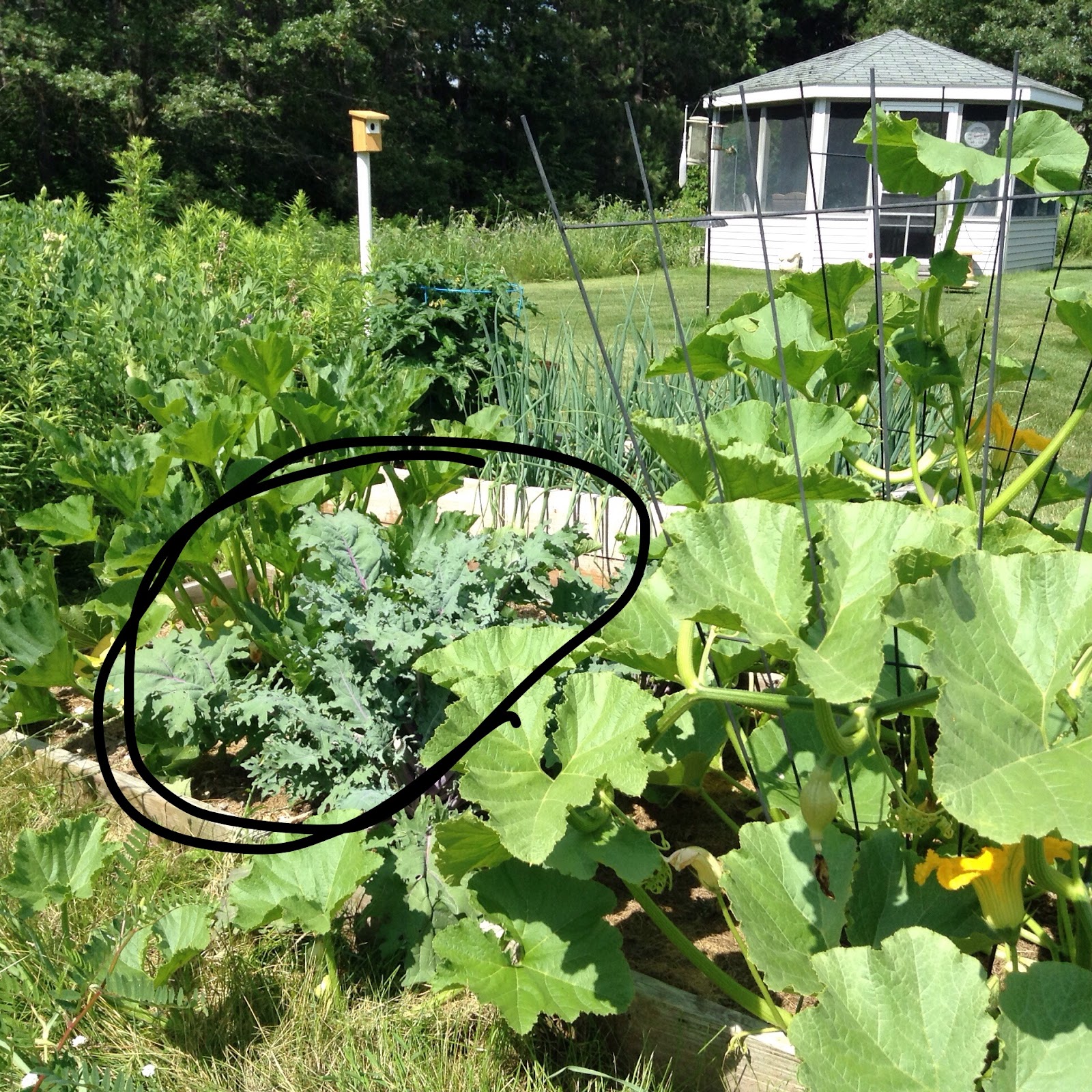
It was looking out at the vegetable bed that got me started on all this picture taking.  We like kale, very nutritious and satisfying.  We normally think of it as a sturdy self-sufficient plant that can stand up to difficulty but this year Lynn planted squash, much more powerful and vigorous:  From Skitch.jpg

The kale is circled and the squash is the nearer plant crowding out the kale and everything else.


I get it, I really do.  I am alive like the animals and plants around me.


--
Bill
Main blog: Fear, Fun and Filoz
Main web site: Kirbyvariety

Twitter: @olderkirby

Sunday, March 20, 2011

Shrinkage and stretchage

Unhappily for a guy who never actually achieved much physical height, sometime  during these recent late-life years, I have lost a little height.  Not so much that you would notice, I think, but enough to make me think of  shrinking all over the place.  From the age reached by several  relatives, I expect to have close to 20 more years to live, a figure  that keeps shrinking.

Our  financial adviser told us that we can give away money that we have without paying additional tax on it to the government, up to a lifetime  total of 5 million dollars.  We don't have one million and what we have  keeps shrinking so we don't feel that we are likely to hit the pay-more  line.  However, he did say that the limit of what can be "gifted" (a  verb) might shrink.  Since government debts are not shrinking and politicians and treasurers are responsible for keeping the enterprise going, they must keep trying to find new ways to get funds.

The number of hours I can sleep keeps shrinking as does the period I can sleep without waking up.  I wake at unexpected sounds but even without  them, I wake up much more often than I used to.  The amount of food I can eat keeps shrinking, too.   It seems that my appetite is not  shrinking, at least proportionately, since my weight and my waistline are not shrinking.  In fact, they are stretching and stressing my pants.   

I live right about the mid-point between the equator and the north pole.   At this latitude, days and night shrink and stretch all the time.  We  are especially aware of this fact right after daylight saving time begins.

Friday, July 13, 2012

Nothing

Our minds and our language can play tricks on us.  "Have you stopped beating your wife?" I read that Norbert Wiener was very upset by what he took to be immoral dishonesty on the part of his parents in the matter of the jolly man from the North Pole associated with Christmas.  

As I was walking up the stair
I met a man who wasn't there.
He wasn't there again today.
I wish, I wish he'd stay away.
Hughes Mearns, in "The Psychoed"

Here's a good rule of thumb:
Too clever is dumb.
Ogden Nash

                                                                       
That time was like never, and like always.
So we go there, where nothing is waiting;
we find everything waiting there.
Pablo Neruda, in
"Poem IV, One Hundred Love Sonnets"


I saw "A Universe from Nothing" by Lawrence Krauss, an astrophysicist, and I knew I was interested.  It's been a New York Times bestseller.  I was immediately struck by the value of Krauss on "nothing":

Before going further, I want to devote a few words to the notion of "nothing"— a topic that I will return to at some length later. For I have learned that, when discussing this question in public forums, nothing upsets the philosophers and theologians who disagree with me more than the notion that I, as a scientist, do not truly understand "nothing." (I am tempted to retort here that theologians are experts at nothing.) "Nothing," they insist, is not any of the things I discuss. Nothing is "nonbeing," in some vague and ill-defined sense. This reminds me of my own efforts to define "intelligent design" when I first began debating with creationists, of which, it became clear, there is no clear definition, except to say what it isn't. "Intelligent design" is simply a unifying umbrella for opposing evolution. Similarly, some philosophers and many theologians define and redefine "nothing" as not being any of the versions of nothing that scientists currently describe.


He continues:

A century ago, had one described "nothing" as referring to purely empty space, possessing no real material entity, this might have received little argument. But the results of the past century have taught us that empty space is in fact far from the inviolate nothingness that we presupposed before we learned more about how nature works. Now, I am told by religious critics that I cannot refer to empty space as "nothing," but rather as a "quantum vacuum," to distinguish it from the philosopher's or theologian's idealized "nothing...we're told that the escape from the "real" nothing requires divinity, with "nothing" thus defined by fiat to be "that from which only God can create something."


There is an inexpensive series of Very Short Introductions from Oxford University and one is "Nothing: A Very Short Introduction", which also focuses on the voids of space and physical nothing.  

We learned back in logic class about Occam's Razor, the principle that concepts should be invented with care and not created carelessly.  Anytime we make the lack of something into a real thing, we can create trouble for our heads and they already have enough trouble.

I used to say to my daughters that it was too bad they weren't here.  Not here?  Right.  You aren't in Chicago, are you?  No.  If you are not in Chicago, you must be somewhere else.  If you are somewhere else, you aren't here.

No elephant is a jackass.  You are no elephant.  Therefore, you are ...

I recommend scrapping causal use of "nothing", which may not exist anywhere in any form except as specified in science.  I am putting the term into the same mental folder I used for infinities, another area where our minds and language habits can confuse us.

--
Bill
Main blog: Fear, Fun and Filoz
Main web site: Kirbyvariety


Tuesday, June 11, 2013

45 years ago today

Today is the 45th anniversary of my beginning to teach at UWSP.  I visited the town and liked what I saw.  But I needed a summer teaching assignment to be able to finance a move to Wisconsin from the East Coast.  One of the things I reported to my wife was having seen a newspaper article on local crime.  One of the items mentioned was the theft of a fishing pole from a garage sometime over the preceding month.  At a time when some of the big cities in the country where having riots related to the war in Vietnam, such a level of crime seemed inviting for a young couple with two young children.


We found that our next-door neighbor had moved to town from a small local village and he expressed a little tension over being in a big town of 25,000.  That was a good lesson in relativity for us, since we were from cities of a million.  We were surprised by comments that so-and-so had lunched with the president recently until we learned that local language used the term for the local college president.


We knew that Wisconsin was much colder than Maryland.  We survived our first winter, which, all these years later, was indeed one the coldest and snowiest we have experienced here.  We didn't realize that the comparatively late spring would be the challenge for our spirits.  We were used to a pretty good burst of azaleas by April 1 and had no idea that we would regularly wait until June 1 or later for flowers, fully leaved-out trees and all the spring birds.


We were accustomed to 99% humidity and 90° heat at 9 AM in June.  We felt the local weather, both cold and warm, was more hospitable than what we left.  It is true that we have humid days sometimes and have even exceeded 100° once in a while.  But Texans have told us to stop whining and to have sympathy for parts of the country that have very warm days all the way through November. We have found that 3 or 4 inches of snow accompanied by expert and tireless snowplow operators and their equipment is much less of an obstacle than half an inch of slippery stuff.  When it is quite cold, say zero or below, the snow is not as much of a road lubricant and is more manageable.


--
Bill
Main blog: Fear, Fun and Filoz
Main web site: Kirbyvariety